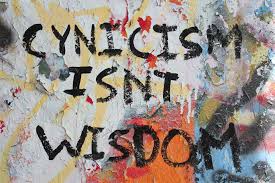
“There is a time in your life when smile becomes smirk.”
Slaughter Beach, Dog, “Mallrat Semi-annual”
A smile, a ray of joy caught up in the moment, pure, sincere, a universal sign of happiness.
A smirk, a beam of irony that “sees through” the moment, smug, sarcastic, the tool of the self-absorbed.
To let one’s smile become a smirk is to embrace the false wisdom of cynicism, seeing through all that one believes has failed them as a coping mechanism of sorts. A coping mechanism meant to inoculate one’s self from the fray of life which can be written off as beneath one’s self when convenient. This, in essence, is not a terrible thing, but it can become a terrible thing because it’s easy. It’s easy to tell one’s self that when something doesn’t go your way, it doesn’t matter because it was meaningless anyway. Once this action becomes habitual, there exists no possibility for growth in the individual, for growth occurs when one confronts that which one fears and conquers it. This is the state of the cynic, delighting in “seeing through” everything and smugly smirking.
The cynic, however, is not doing himself any favors by trying to transcend sentiment out of fear of being human. The cynic’s ironic smirk exists as a cheap-version of the sincere person’s smile. The sincere person can recognize that not all things will go their way and this presents opportunities for growth, and by not attempting to to “see-through” any potential failures or shortcomings as devoid of meaning to save one’s self-esteem and not make one responsible, the sincere person can struggle and then overcome. The sincere person by not “seeing through” things can see that there is meaning to all the failures and shortcomings along the way to the goal, which can make the failures and shortcomings tolerable, and sometimes appreciated. The resigned cynic has no meaning to grasp on to, for as noted by C.S. Lewis “to ‘see-through’ all things is the same as not to see”, and when you’re staring into an abyss there is nothing to latch onto.
Rather than embracing the easy way out which leaves one devoid of meaning, it seems necessary to have a dogmatic belief in the value of sincerity.
Don’t let your smile become a smirk, and remember that sincerity is always in season.


 E. Aaron Baughman's Eclectic Mess