The Consequential Morals of the Mask

To look at moral dilemmas in consequential terms is to ignore the intent of an action and evaluate its morality only on its outcome or consequence. Under such terms, there aren’t any good-faith arguments against wearing a mask while in public places.

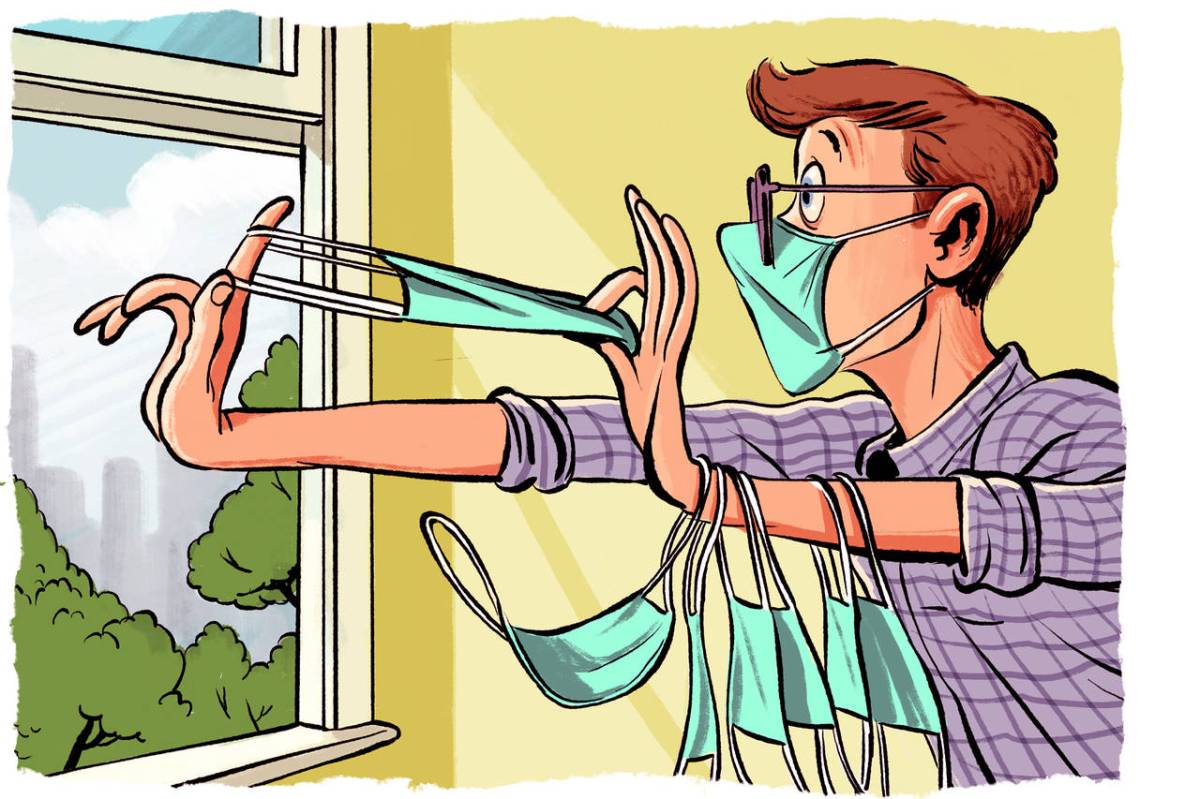
Cover Image Illustrated by Zohar Lazar for the Wall Street Journal

As I write this, the case-fatality rate for COVID-19 in the United States, based on data from John Hopkins University, is 3.1%. I am aware some people may point to other underlying conditions that could have led to such deaths. However, a death is a death regardless of whether it was due purely to COVID-19 symptoms or a case of COVID-19 symptoms exacerbating a pre-existing condition.

To look at moral dilemmas in consequential terms is to ignore the intent of an action and evaluate its morality only on its outcome or consequence. Under such terms, there aren’t any good-faith arguments against wearing a mask while in public places.

In the United States, wearing a face mask to protect the health of others has somehow become a culture war issue. It is disheartening to know that we as a country have actively prolonged and worsened the pandemic by not showing common regard to others, but we must now live with the consequences of this.

Now, I understand there are some apprehensions about wearing a mask as it is not something that was standard practice in American society before the pandemic, but let me posit that standard practices no longer apply. Standard practices no longer apply as we are not in a situation of standard living. We are in the middle of a pandemic, a pandemic that doesn’t care who you are or how you might wish the world to be. Given that the coronavirus doesn’t care about how we desire the world to be and is a force that can negatively impact our lives for an increasingly longer time the longer we do not take it seriously, we, as a society, should do our damnedest to live in the world as it is, not the one we desire it to be.

There are several choices to be made and each choice has different ramifications. You, as an individual, and as a member of a greater society that is currently crippled by ineffective behavior concerning the spread of COVID-19, can choose to continue as if the pandemic isn’t a thing that impacts our lives, which will likely lead to further unnecessary death and economic hardship. On the other hand, you can choose to recognize the necessity of some activities, but that we also exist in an environment directly in conflict with the sustainability of said activities. Therefore, we must wear some protective equipment, a mask, to reduce our chance of contracting or spreading COVID-19 to help enable these necessary activities.

Let’s assert for a second that the only purpose of wearing a facemask is to protect the wearer from contracting COVID-19 and that it has no reduction in the likelihood of spread. In a situation such as this it might be reasonable to not wear a mask, but why one would actively allow themselves to be at greater harm than necessary to a potentially life-threatening virus is beyond me. It makes as little sense as it would for a BMX rider who is contractually obligated to perform all of his dangerous stunts on a hostile track opting not to wear any protective gear.

In reality, the mask, in addition to partially protecting the wearer from contracting COVID-19, also reduces their likelihood of spreading it as well, so the previous BMX analogy doesn’t accurately frame the situation. A more apt comparison is that of a drunk driver, who by getting behind the wheel increases the likelihood of his/her death and increases the likelihood his/her driving will lead to the death of another person. In consequentialist terms, this is not much different than opting to not wear a mask, for both increase the likelihood of death for all parties involved.

Now, I understand that if we are to reduce the above analogy’s argument to its most base level we could arrive at some bizarre conclusions. If we can’t perform any action that increases the likelihood of suffering for another person, then it is impossible to exist, for almost any action has the potential to do so. However, fear not, for moral principles are always hard to completely actualize in all given moments, but they should still serve as north stars for action. To wear a mask is to actively recognize that there isn’t some hypothetical risk in harming another person, but there is an actual risk, and you can do this with no significant cost to yourself.

If you understood the above assertion and still believe you should not have to wear a mask due to perceived infringements on your liberties, real or not, I ask you, “What is more important, your temporary comfort and satisfaction due to not wearing a mask or the health/life of another person/the economy of the nation that impacts all of us?”. If your answer to that question is the former, then I ask you to reflect on what that means about you. If your answer to the question is the latter, however, and you still have concerns about the possible issues relating to liberty, let’s explore that.

To explore whether or not being required to wear a facemask is an actual, legitimate, infringement on liberty or an unwarranted assault on the liberty of the people, It would be helpful to think of the saying, “the right to swing my fist ends where the other man’s nose begins.” As a society, we have generally agreed with this statement, and it has never been one, at least to my knowledge, that has inflamed a culture war within this country. However, the same concept applies to wearing a mask; your right not to wear a mask ends where another person is, another person, who is just trying to go about their life to the best of their ability without being subjugated to potential infection.

Now, there is a slight difference between the example of swinging around your fists and wearing a face mask. A difference that for the purpose of exploring consequential morals is beside the point, but a difference that should be noted for the sake of honesty. The example with the fists is a restriction of action while the example of the facemask compels action. At the current point, the difference between restriction and compulsion, however, seems rather arbitrary,, for both instances share a common principle: that society at large can and should be able to limit the range of acceptable behavior for how it negatively affects innocent people.

I understand that many people who are against wearing a mask are against it due to a distrust in governmental institutions such as the CDC, and I’m not even going to attempt to change anyone’s opinion on that for it is seemingly a fool’s errand. However,I will ask any one who is of that persuasion to consider the concept of Pascal’s wager: the argument that one should believe in God because the cost of doing so is minuscule compared to the reward if God exists and you believe in him. Now, there are some issues with that argument in that application, for it is unclear how to decide which God one should align themselves with, etc. However, when we apply this logic to facemasks and COVID-19 no issues make themselves apparent. To take the logic of Pascal’s Wager and apply it to COVID-19, one should wear a mask for the cost is insignificant, temporary, personal discomfort, and the benefits are lessening the spread of an infectious disease and reducing the amount of time it is necessary to wear a mask.

If you desire to not wear a mask, you should wear a mask to decrease the amount of time you will have to wear a mask. To forgo a mask while desiring not to wear a mask is to only be concerned with one’s self and to take an action that will prolong the economic hardships for everyone. Please think about how the actions you take have ripple effects and that if you opt to not wear a mask, your decision to do so does not exist in a vacuum.
Don’t Let Your Smile Become a Smirk

“There is a time in your life when smile becomes smirk.”

Slaughter Beach, Dog, “Mallrat Semi-annual”

A smile, a ray of joy caught up in the moment, pure, sincere, a universal sign of happiness.

A smirk, a beam of irony that “sees through” the moment, smug, sarcastic, the tool of the self-absorbed.

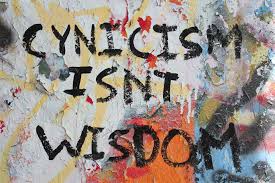
To let one’s smile become a smirk is to embrace the false wisdom of cynicism, seeing through all that one believes has failed them as a coping mechanism of sorts. A coping mechanism meant to inoculate one’s self from the fray of life which can be written off as beneath one’s self when convenient. This, in essence, is not a terrible thing, but it can become a terrible thing because it’s easy. It’s easy to tell one’s self that when something doesn’t go your way, it doesn’t matter because it was meaningless anyway. Once this action becomes habitual, there exists no possibility for growth in the individual, for growth occurs when one confronts that which one fears and conquers it. This is the state of the cynic, delighting in “seeing through” everything and smugly smirking.

The cynic, however, is not doing himself any favors by trying to transcend sentiment out of fear of being human. The cynic’s ironic smirk exists as a cheap-version of the sincere person’s smile. The sincere person can recognize that not all things will go their way and this presents opportunities for growth, and by not attempting to to “see-through” any potential failures or shortcomings as devoid of meaning to save one’s self-esteem and not make one responsible, the sincere person can struggle and then overcome. The sincere person by not “seeing through” things can see that there is meaning to all the failures and shortcomings along the way to the goal, which can make the failures and shortcomings tolerable, and sometimes appreciated. The resigned cynic has no meaning to grasp on to, for as noted by C.S. Lewis “to ‘see-through’ all things is the same as not to see”, and when you’re staring into an abyss there is nothing to latch onto.

Rather than embracing the easy way out which leaves one devoid of meaning, it seems necessary to have a dogmatic belief in the value of sincerity.

Don’t let your smile become a smirk, and remember that sincerity is always in season.

Five Tips to Improve Your Essays Immediately

You need to find some incriminating dirt about your professor to hold onto throughout the semester.

I just finished my first year of college, and I had to write a few papers which all turned out pretty well. So, I thought I would share some pro tips and tricks for how to crush any essays you ever have to write.

The quality of your paper has nothing to do with the arguments and perspectives you put forward. All that matters is that your paper has the style of presentation which makes it seem like you know what you are talking about.

  • Tip 1: Make Your Topic Clear

You do not want your reader to be confused as to what your paper is about. To make sure this doesn’t happen, you should have within the first paragraph of your paper a sentence that says “This paper will be about…”. This makes it clear what your paper is about so the reader can not misinterpret it.

  • Tip 2: Make It Clear Who Wrote Your Paper

You might think that putting your name at the top of the essay, would make it clear that it was written by you. However, it is better to play it safe and make it clear. If you make it clear that the paper was written by you, you can avoid any charges of plagiarism being thrown at you.

Example Sentence: “I, myself, Aaron Baughman, hold in my mind the belief that peak sausage is better than peak bacon.

  • Tip 3: Make The Scope of Your Topic Abundantly Clear

You might think that the substance of your paper would make the scope of your topic clear, but remember substance is not what matters. What matters is having presentation that makes it seem like there is substance! To make the scope clear, you should put in your intro paragraph something along the lines of: “Throughout history…”, “Many people hold opinions on…”, or “[Insert Topic Here] is the most important thing in the world as noted by important people”.

  • Tip 4: Do Not Be Confident

This is where presentation is really important! Instead of saying something assertive, such as, “the sky is blue”, you’re going to want to say something more along the lines of “the sky might be blue” because nothing can be known for sure. If you use qualifying statements for everything, you can never be wrong.

Make sure to use the Socrates quote: “True knowledge exists in that you know nothing.” Also, if your professor challenges you on this, point them to the aptly placed Socrates quote in your paper. If they challenge you on not being assertive, they are challenging Socrates, which you could use to publicly shame them (I’ve heard blackmail is an effective way to crush any essay).

  • Tip 5: Blackmail

Okay, this tip has nothing to do with your paper’s presentation or substance, and I have never personally tested it, so do not hold me accountable on this one. You need to find some incriminating dirt about your professor to hold onto throughout the semester. Do not make it obvious that you have this information, but make allusions to it throughout class discussion and any emails you have with your professor. They will probably pick up on what you’re putting down and be afraid to give you anything less than a B.

On The Dangers of Being Comfortable and Camping

We should be afraid of being comfortable. When we are comfortable, we feel safe which is not an inherently bad thing, but this safety we strive for can lead to complacency. There exists within us a capability for growth and to embrace safety over growth it so sell one’s self short.

I often find myself embracing the mindset of safety for a few months which is then shattered by a month of willful discomfort that enables personal growth. I am no paragon of growth, for comfort and safety are positive for a certain amount of time. However, one should be careful not to sink too comfortably into the deep sofa cushion of life.  

This mindset is laid out quite well in the song Himalayas by Scott Mulvahill which I first head at a concert at my hometown church during my Winter break from school. The song talks about escaping the complacency which accompanies being comfortable.


I wanna go where I’ve never been, gotta know what I’ve been missing
I wanna come back different

Scott Mulvahill, Himalayas


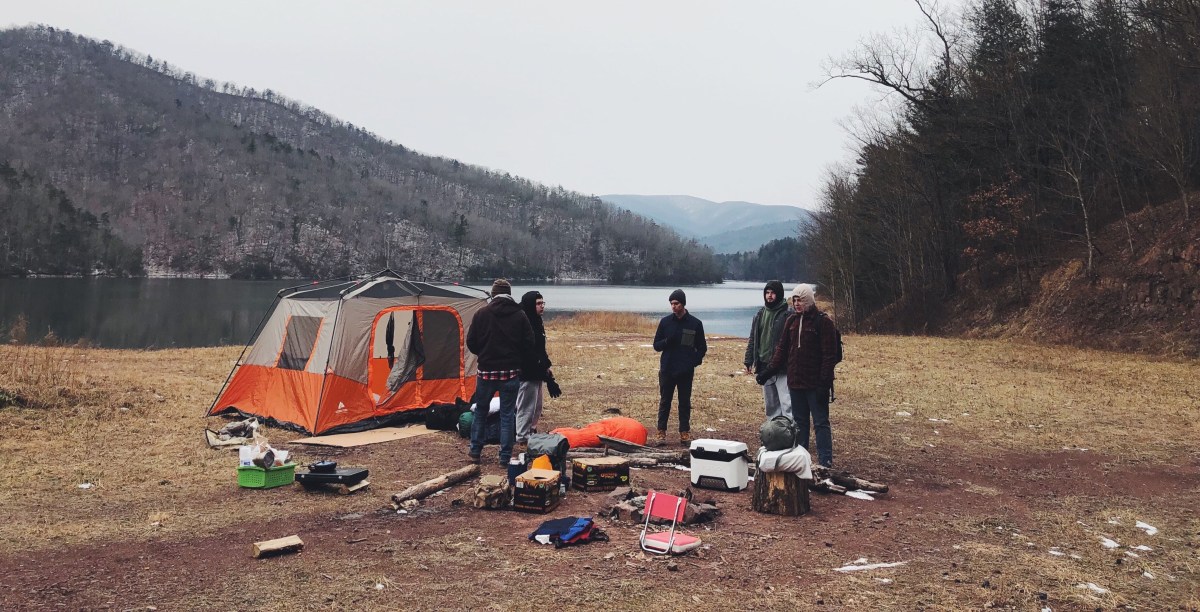
My first week back from Winter break, I accepted an invitation to go on an impromptu camping trip with a few friends.  This definitely pushed me out of my comfort zone as it was a pleasant 18 degrees outside. The bitter cold, however, did not worsen the experience, it made it infinitely better due to the camaraderie that came along with the growth we experienced as a result of being uncomfortable.

On Joy, Perfectionism, and Water Coloring

All that existed in the world, for a brief moment, was the room I was in, the people I was with, and the watercoloring set.

When envisioning a Spring Break trip to the beach, watercoloring is not likely to enter one’s mind. However, it was the highlight of mine. I think this is because true joy is an outgrowth of experience, and to seek joy in an experience is to make joy unobtainable. When the opportunity to watercolor presented itself, I had no intention except the act of watercoloring which led to a state of child-like bliss where all that existed in the world, for a brief moment, was the room I was in, the people I was with, and the watercoloring set.

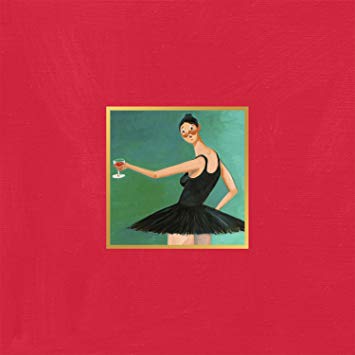
I wanted to recreate one of the many cover for one of my favorite albums, My Beautiful Dark Twisted Fantasy by Kanye West. So, I started to make the red background to the cover which was easy enough, but the entire time I was making the background I was dreading having to do the center of the album cover. The center of the album cover would prove to be an actual test of artistic ability which I have little.

As I expected my attempt at painting the ballerina in the center of the cover was less than stellar, and I fully considered starting over in the chase of doing it perfectly (what that would even entail, I have no idea). However, I thought it better to embrace the flaws in my creation.

Perfection is a nigh-unobtainable goal. Just like the pursuit of joy, true “perfection” occurs most when it isn’t being sought after, for when perfection isn’t the goal most outcomes can be considered “perfect” in some capacity or another.

If you look for perfection, you’ll never be content.

Leo Tolstoy

On Self-Expression and Laptop Stickers

The contrast between the metal frame of the ~$1,000 Macbook and the ~$2 stickers can be quite humorous.

Update: I no longer fully stand by the snarky ending about “The Office”, for while everyone likes it, it is still a form of self-expression, and the true intent behind this post was to embrace self-expression.

If you’ve ever been in a college library, you’ve probably seen a bunch of college kids’ laptops which by and large are emblazoned with cheap vinyl stickers. The contrast between the metal frame of the ~$1,000 Macbook and the ~$2 stickers can be quite humorous.

I think this juxtaposition points something out to us if we’re looking for it, that is. This being that we often buy more expensive products not for their functionality, but for the “clout” or so that we can “flex” on each other. We try to make their purchases reflect our value to each other as a rule.

However, it is the stickers that we adorn our laptops with that truly reflect our value to each other, for stickers are far more unique than the metal frame of a laptop and the logo on it. The stickers on our laptops reflect what we are interested in, and that’s what truly matters. Just by looking at the stickers on someone’s laptop you should be able to quickly discern what their interests are.

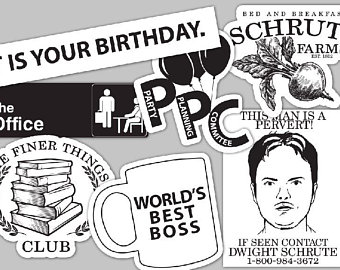
However, if the stickers on your laptop just consist of references to “The Office”, I really don’t know anything about you because everyone likes “The Office”.

I might just be overthinking this. Perhaps a sticker is just a sticker.

P.S. : If you have stickers on your laptop, I’d love for you to reach out and tell me what they mean to you.

On Congestion, Chapstick, and Gratitude

I only thought to write this because I have been quite congested the last few days, which is emblematic of the issue: we are ungrateful as a rule.

I only thought to write this because I have been quite congested the last few days, which is emblematic of the issue: we are ungrateful as a rule. We go through life with so many blessings and things to be grateful for that we take for granted, and it’s only once we no longer have one of these things that we feel any emotion about it. This is probably why the popular saying:

You don’t know what you have until it’s gone.

exists. Sure, it might feel like a sappy cliché kind of thing to say, but that doesn’t make it any less true.

Now, back to congestion, when we are congested and having to blow our nose every 30 minutes it annoys us to no end as it should. We wake up every morning hoping it’s gone, we take steam showers to loosen up drainage, we take medicine to do the same. We will do just about anything to get rid of congestion.

When we finally aren’t congested anymore we appreciate it for an hour at most, and then we completely forget about congestion as a concept until it strikes us again.

I propose that congestion should always be in the front of our minds. We should wake up every day take a deep breath through our noses and let it out as slowly as we can through our nose as to really cherish that specific moment. After this, we should say to ourselves “I am grateful I am not congested.”

And if for some reason you’re the one person who has never been cursed congestion, think about having chapped lips. When we have chapped lips it annoys us to no end. We then search through assorted drawers to find the one stick of chapstick we’ve had had for the last few years and make sure we keep it on us as if it were a member of the “Big Three” — wallet, keys, and phone — for a short bit of time. However, once this short bit of time has passed we tend to put the chapstick back in that random drawer.

I think we should extend “Big Three” membership rights out to chapstick as a daily reminder to ourselves to appreciate that our lips aren’t chapped.

If the chapstick examples means nothing to you either, then you have transcended this plane of existence and I have a million questions to ask you when you have the time of course because I’m sure you’re a busy person.